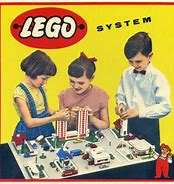
 Children Board Games For The Picky Child of Today will give you valuable information about this type of children game.
Board games have been a source of entertainment for a long time now. Evidence shows that board games existed 5,000 years ago. An example is Backgammon. Backgammon is a very popular adult board game. It was actually invented in ancient Persia way before modernization started. But there are still some other board games that were invented way before then.
They date up to 3500 BC and to no surprise, it was the work of Egyptians. A board game usually consists of a marked board where pieces are moved. Each board game has its own set of rules that need to be followed. There is a vast diversity in board games with new ones coming up every other day.
From single player games, such as puzzles, to up to eight players such as Captain Sonar. There is a limit to the number of players that can play a board game at once since the board will get too crowded when more than 8 players are playing.
Board games have somehow been able to brave the winds of change throughout history. Otherwise, we would be looking at them in museums. There are a couple of reasons that constantly make board games interesting.
Why do we still play board games?
People have developed a liking to board games because they offer more than just entertainment; unlike the modern video games.
Board games promote interaction
As friends or family gather around a board ready to start playing, they will definitely have to talk to each other. This is the best time to develop a positive relationship with your kids or with your parents because there is no tension. People are having a good time and more likely to be themselves.
A good family game such as Monopoly will definitely help a family spend long hours of quality time as they negotiate what properties to sell.
With modern technology where people are being pulled further and further away from close personal interaction, board games are here to help solve this problem.
You become smarter
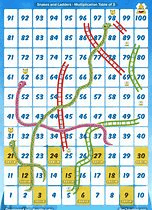 Most board games are based on strategy and trying to outsmart your friend or the game itself. Play a board game long enough and you find yourself being in a better position to handle real-life problems.
Games such as Chess teach us that there is more than one way to achieve a goal and that every move we make has to get us one step closer to achieving our goal.
It’s not put down in writing but we naturally acquire these skills and assimilate them in our lives. We get better problem-solving skills and are able to keep an open mind in solving the various challenges life throws at us.
Better for child development
Introducing the right board game to your child at the right time boosts their cognitive development. Other than improving their problem-solving skills and how they handle complex situations, they also help in memory and information retention. Your children increase their perception of concepts and enhance their learning capacity.
Playing board games keeps the mind active and increases response time. This helps in agility and alertness. This goes on to make sure your child is good at sports and has better physical development.
With the quality time spent with family, our children develop confidence, higher self-esteem, and good decision-making skills. From this, chances of stress and high blood pressure are greatly reduced. As if that’s not enough, it also helps build a better immune system.
From this, we see that board games help build a better human being. This is good for society and helping groom leaders for tomorrow.
Board games come in different varieties. There is a something for everyone; from ten-year-old kids to our grandparents. For each group, the games are customized to meet the needs of the target audience. Here are some of the categories.
Board games for preschoolers
Catan
 Catan is a pretty interesting game for your ten-year-old. It has a captivating story behind it and the theme is just what your children need to keep them occupied for a while.
It is about a group of sailors who reach an island where they decide to make a life for themselves. The island is called Catan. It is completely free of any modern development but is full of resources.
It can have up to 4 players and a minimum of two. The board is a hexagon with all the different areas of the island given a number.
Each marked area produces a certain resource which you acquire once you roll the dice and get that area’s number. Once you have your initial settlement, you start building. Bring up roads, houses and form cities from scratch.
This really opens up a child’s mind so that they can understand where things come from and how the world works. It teaches on strategy since they exchange resources with the aim of building the best cities in order to win.
Hungry Hungry Hippos
This is a really nice game if you just want to have fun with your child. Just as the name suggests, it’s about hippos who eat stuff.
The board has four hippos on each side for each player. The hippos are controlled by a lever that is used to open their mouths and extend their heads so that they eat the marbles that are in the common area. Once the hippo eats a marble it goes to that player’s reserve.
The game ends when all the marbles have been eaten and the winner is the one with the most marbles in their reserve. It’s the perfect game for parents to enjoy some laughs with their kids. It’s not hard and doesn’t have rules; other than common sense.
Its simplicity makes it the ideal choice for first-timers. It improves your child’s alertness and leads to faster responses.
The Quest for El Dorado
This is a deck building race game of two to four players. It involves more thinking and planning than the previous two but presents it in a fun way. The setting is a jungle where players use cards to help them get through to the golden city at the other end of the map.
Each card enables you to cross a specific area of the map. The map is built by arranging various hexagonal shapes each representing different challenges. A player can only cross an obstacle once they hand in the required card.
Have fun with your kid as you trade cards to see who gets to the golden city first. The children passively apply different strategies in order to get through different obstacles.
Carcassone
Carcassone is a tile-placement game. The game starts with one tile facing up where you add tiles adjacent to it in any direction you want. There are other 72 cards stacked facing downwards from which you pick when it’s your turn.
You get points whenever you place followers on strategic tiles to earn you points. There are different types of followers; thieves, monks, knight, and farmer. Each follower earns points in specific tiles. For example, a thief earns points from roads and a monk from cloisters.
Carefully placing the limited followers in places where they earn you the most points is the goal of the game. It can be played by 2 to 5 players. Opponents can thwart your plans by placing tiles that allow them to share your points or reduce the number of points you earn.
This requires a little more thinking and is just the thing for the active and growing minds of our kids.
Splendor
This is a card development and chip collecting game. The collected chips are used to buy cards which represent the means of transportation, shops, and other resources. The aim is to become as wealthy as possible so as to get prestige points.
It is meant for 2 to 4 players where each player has a turn. Each card you buy gives you a discount when buying the next of the same category. If you get enough gem cards you can acquire a noble’s card and add to your prestige points.
The game ends when a player has attained 15 prestige points. It seems complicated but it is actually really easy to learn. You can play it from start to end in about 30 minutes. It really opens up your child’s mind and develops strategical thinking.
Board games for teenagers
Pandemic
 Pandemic is a board game where the players, rather than competing against each other, work together. The players work together to cure diseases that have broken out in the various populations depicted by the board.
Each player has a unique character trait that helps them do certain tasks faster than others. There are scientists, quarantine specialists, contingency planners, and operations expert. From the roles, we can clearly see that these are some big words. They challenge the teenagers as they build their coordination skills.
There is a deck of cards where players draw from. The card picked can either accelerate the pandemic or help reduce its spread. If the pandemic goes out of control or the players take too long to cure it, all the players lose. Otherwise, they win.
Trivial Pursuit
Trivial Pursuit is one of the first trivia games and is still famous today. It involves 2 to 6 players. However, this is not the limit since there can be more players when teams are involved. Each player or team starts at the center.
The board is designed to look like a wheel where players move along six spokes or along the circumference. They can move in any direction they want. The number of steps moved is determined by the number rolled on the die. At each stop, the player answers a question. A correct answer means they get to roll again.
At the end of each spoke, there is a special wedge-shaped step. Once they answer a correct question on this step they get a pie-shaped piece to add to their collection. Once a player has collected all six pie pieces they proceed to the center of the board where they answer one final question to win the game.
This game is sure to catch the attention of your teenagers with all the tricky questions that are asked and even as they struggle to get the right die roll to land on a piece of the pie.
Scrabble
Scrabble is a word game. With up to four players each with a row of 8 letters. The playing pieces each have a single letter and each letter has a given amount of points. Whenever you use a certain letter you get the cumulative points added to your score.
Common letters such as ‘a’, ’I’, have fewer points as compared to letters such as ‘x’ and ‘q’. You get more points when you form longer and more complex words. The words must be in the English dictionary for them to count.
The board starts out empty and once the first piece is placed you have to add on to the existing pieces to keep the game going. The board is divided into grids where the letters are placed. Some grids allow you to get more points if you land a character on them i.e. triple word score, double letter score.
The game ends when all letter pieces have been used up or there are no more viable options. The winner is the one with the most points at the end.
This game appeals to the competitive and intuitive nature of our teenager’s minds.
The Resistance
By looking at its name, we can tell it has something to do with overthrowing leadership. There are two teams. One is the actual resistance team and a team of Imperial spies. The identities of the players are not revealed to all the players. Only the spies know each other.
The resistance wins after three missions succeed and fail if three missions fail. There are ten players and one leader. It a social engineering game where the spies try to thwart plans of the resistance without revealing their identity.
It depends on the ability of a player to outwit the other team and trying to identify the spies before it is too late.
Codenames
In this game, there are 25 cards laid out in front of the players. There are two teams each with one spymaster. The spymaster sits with the other spymaster on the opposite side of the tableau as the team members.
The 25 cards each have names written on them. This game requires a lot of deduction skills since the spymaster needs to give a one-word clue that leads his team members to pick their fellow agents in the field.
The first team to pick out all their agents wins. This game forces the players to really think and try to connect the clue with the named cards.
Board games for the family
Monopoly
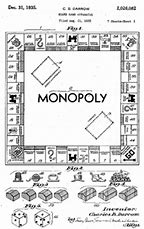 This game will never get old. It has been there since 1902 and is still thriving. The board has properties along the edges where people can buy if they have enough money.
Once you purchase an entire set of properties, you can set up houses or hotels in the property and when other players land on your property they pay you.
It’s hard to tell when the game ends since it can last for hours and hours. Players buy, sell and trade properties with the aim of getting more and more money. It is a really fun and interactive family game since it supports up to 6 players.
Twister
This allows for some physical movement within the game. Instead of just rolling dice and moving pieces, you twist your body around giving you a good workout.
It comes with a twister mat and a twister spinner. The mat has circles of different colors. The spinner dictates which limb is to be placed on which color. Once decided the player has to do their best to get their hand or foot to that color.
It really cracks up the kids as their folks struggle to get into position. A player is knocked out when their elbow or knee touches the mat. The last player left is the winner.
Charades
Here a player picks a card from a stack and tries to make his or her team members guess the word without saying it. It may involve making faces, jumping and doing all sorts of poses just to get the right message through.
This is just what the family needs to make them feel free and together. It is really interactive and allows the family to bond. If they get used to the cards, they may decide to make custom cards to make the game more interesting.
Conclusion
As we have seen, board games play an important role in our lives. Since they are here to stay we might as well get the best out of them. They help us learn, bond as a family, relate well with our friends, get to know each other better and have fun while at it.